


If you’re feeling anxious about your first EMDR session, that makes complete sense. Starting trauma therapy can feel vulnerable, especially when you’re already navigating a big life transition like a breakup, career shift, or becoming a parent. Most women we work with feel a mix of hope and nerves at the beginning. You don’t have to feel fully ready to start.
EMDR (eye movement desensitization and reprocessing) therapy is a gentle, structured therapy that moves at your pace. You won’t be pushed to share more than you want to, and we focus on building safety before doing any deeper processing. Research shows EMDR can significantly reduce trauma symptoms and emotional distress.
In this guide, we’ll walk through:
If you’re curious about EMDR therapy, you’re in the right place.
Let’s Find a Path Forward Together
If you’re tired of feeling overwhelmed, stuck in old patterns, or unsure what to do next, I’m here to help you reclaim emotional balance and clarity.
A Quick Look at EMDR Therapy
At its core, EMDR focuses on helping the brain process memories that feel stuck. When a stressful or traumatic experience isn’t fully processed, it can keep showing up as anxiety, overwhelm, or self-doubt. EMDR uses gentle movements to help the brain reprocess those memories so they become less disturbing over time.
Here’s a simple overview of what to expect:
- EMDR uses structured steps, but sessions are designed to move at your pace
- Preparation and emotional safety always come first, especially in the first session
- We build coping tools so you feel supported between sessions
- As the session continues, we adjust based on how you’re feeling
- Later sessions may focus more on processing, but only when you feel ready
EMDR is relatively new compared to some forms of talk therapy, but research supports its effectiveness for trauma.
What Is an EMDR Session Like?
If you’re wondering what an EMDR session is like, the short answer is this: it’s structured, supportive, and always paced around you.
We start with a gentle check-in so I can understand how you’re feeling that day. Your therapist will guide you through grounding and preparation so you feel safe.
What do your eyes do during EMDR?
During EMDR, we use something called bilateral stimulation. This might include guided eye movements, gentle tapping, or alternating sounds. If we use eye movements, you’ll simply follow a light or a ball on your screen moving back and forth. It’s not hypnotizing, and you’re fully aware the whole time. These movements help your brain process memories so they feel less stuck and intense.
How long does a typical EMDR session last?
Most EMDR sessions last about 50–60 minutes, similar to other therapy sessions. Some therapists offer longer sessions, but we always choose what feels supportive and sustainable. We start with a check-in, do a bit of processing work, and end with grounding so you leave feeling steady.
Will I have to talk about my trauma in detail?
No. You don’t have to share every detail of a traumatic experience. EMDR allows your brain to process memories without needing to retell the entire story out loud. You can share as much or as little as feels comfortable. You’re always in control.
What emotional responses might come up?
Everyone’s experience is different. You might notice emotions, thoughts, or body sensations shifting during the session. Some people feel relief, some feel tired, and others feel calm afterward. Strong emotions can come up, but we go slowly and make sure you feel supported and grounded before the session ends.
EMDR is not about intensely reliving a traumatic event. You stay present, in control, and supported. Across the eight phases of EMDR therapy, we move slowly and collaboratively.
Our goal is simple: help you feel steady, safe, and supported while your brain does the healing work.
What are you supposed to do during EMDR?
You focus on thoughts, body sensations, and traumatic memories while following gentle movements. Your therapist will guide the session and adjust before the next session if needed.
The First EMDR Session: Getting to Know You
Your first EMDR session is all about building comfort and trust. Before any EMDR work begins, we focus on connection, safety, and helping you learn what to expect. Starting therapy can feel vulnerable, especially if you’re healing from post-traumatic stress disorder or a difficult life transition. We go gently.
Here’s what you can expect in your first EMDR therapy session:
- We start with a conversation. Like talk therapy, we explore what’s bringing you in and your goals for therapy work
- I’ll help you understand the process and what to expect, so nothing feels confusing
- We begin creating a treatment plan together based on your needs and pace
- We focus on building a sense of safety using grounding and relaxation techniques
- You’ll learn simple coping tools to use throughout the session and between sessions
- We may talk about how EMDR therapy involves guided eye movements or tapping later on, but we don’t rush into it
The first phase of EMDR is about preparation and stabilization. EMDR isn’t about pushing you into painful memories right away. It’s designed to help you feel steady first. Research has shown that EMDR can be highly effective for treating PTSD and trauma when clients feel supported and prepared.
How an EMDR Session Usually Flows
Many clients come in wondering what will actually happen during an EMDR session. The structure is gentle and predictable, which helps you feel steady as your healing journey unfolds.
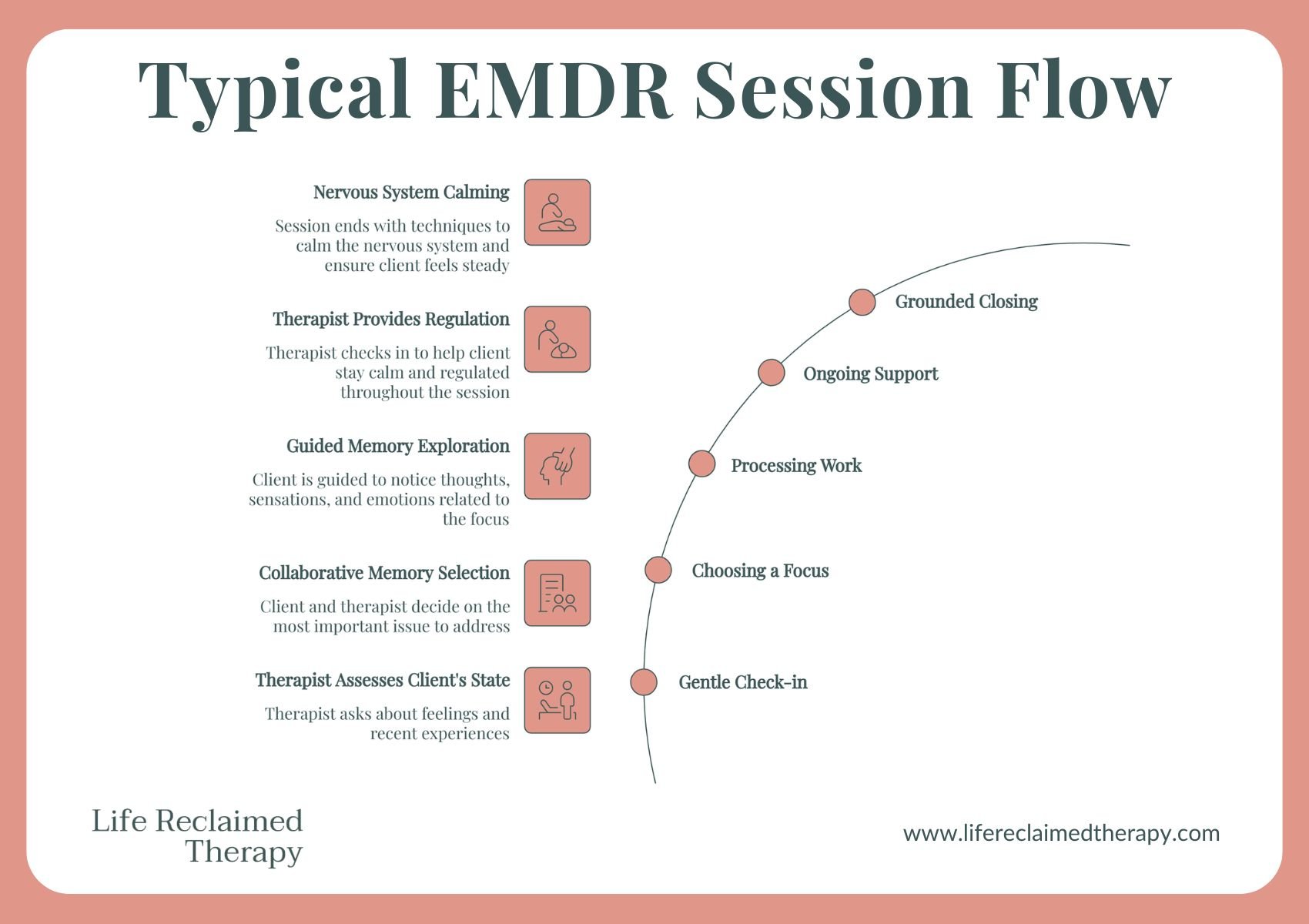
Here’s how a typical session flows:
- Gentle check-in: Your EMDR therapist will check how you’re feeling and what’s come up since the last session. This helps us adjust the pace and focus.
- Choosing a focus: Together, we decide what feels most important. EMDR can help with a recent stressor, an older memory, or emotions and physical sensations connected to a traumatic experience.
- Processing work: You’ll be guided to notice what comes to mind, including thoughts, body sensations, or emotions. We move slowly, so nothing feels overwhelming.
- Ongoing support: Throughout the EMDR process, your therapist will check in to help you stay regulated. Therapy may feel similar to forms of talk therapy, but EMDR allows deeper processing without needing to retell everything.
- Grounded closing: Before the session ends, we focus on calming your nervous system, so you leave feeling cared for and steady.
Sessions of EMDR are designed to support long-term healing. One session can bring relief, though treatment may take longer depending on your goals. The goal of EMDR therapy is to help memories feel less disturbing and help you begin your healing journey with confidence.
How effective is EMDR therapy?
EMDR is a well-researched therapy for PTSD and other forms of trauma therapy. Some people see changes quickly, while others take longer to complete treatment.
How Many Sessions of EMDR Are Needed?
EMDR therapy is not one-size-fits-all. It’s a therapeutic process that adjusts to you, your nervous system, and what you’re moving through.
Some people notice relief sooner than they expect, while others benefit from taking more time. Therapy isn’t rushed here. Sustainable healing matters more than quick fixes.
A few factors that influence how long EMDR therapy may take include:
- The type and duration of trauma you’ve experienced
- Current stressors
- How supported you feel outside of therapy
- Your goals for healing and growth
- How your body and emotions respond during sessions
Throughout the process, we regularly check in and reevaluate what’s working. That ongoing reevaluation helps ensure therapy stays aligned with your needs, not a preset timeline.
This therapeutic approach supports emotional resilience, confidence, and a deeper sense of steadiness as you move forward. EMDR helps you process what’s been weighing you down so you can show up more fully for the life you’re building.
What are the potential benefits and side effects of EMDR therapy?
EMDR trauma work can lead to relief, confidence, and calmer reactions. Between sessions, you might feel tired or emotional as memories shift.
Common Worries Before Your First EMDR Session
It’s completely normal to feel nervous before your first EMDR session. Most people come in wondering what to expect and whether it will feel overwhelming. Let’s walk through a few common worries so you can feel more prepared and supported.
“What if I get overwhelmed?”
- EMDR treatment is paced gently. We build safety first.
- We use grounding and a simple body scan so you stay present.
- If emotions rise, we slow down. You’re always in control.
- The goal is to help memories feel less intense, not to flood you.
“Will I have to talk about everything in detail?”
- No. Because EMDR allows the brain to process without retelling every detail, you can share only what feels comfortable.
- We may focus on a negative belief and gradually build a more supportive positive belief.
- Understanding EMDR therapy helps many clients feel reassured that less talking is often needed than in other forms of therapy.
“What if I don’t know where to start?”
- That’s okay. Starting EMDR therapy doesn’t require a perfect story or timeline.
- We’ll work together to create a plan and adjust as we go.
- Healing can take time to complete and sometimes take much longer than expected, but you’ll have support between sessions.
You don’t have to do this alone. We move at a pace that helps you feel steady, safe, and cared for.
Thinking About EMDR? Let’s Take the Next Step Together
If you’ve been reading and quietly wondering whether EMDR could help, this is your gentle invitation to keep exploring. You don’t have to feel 100% ready to begin. You just have to be curious.
At Life Reclaimed Therapy, we work with millennial women navigating trauma, identity shifts, and big life transitions. Our approach is warm, collaborative, and paced around your nervous system. This is a nonjudgmental space where you can show up exactly as you are.
Reach out to ask a question or schedule a consultation. You don’t have to navigate this season on your own.