


Discovering your partner’s emotional affair can feel like a punch to the gut. Even if no sexual encounters occurred, the betrayal of emotional infidelity often cuts just as deep, sometimes even more so. For example, in one study, emotional infidelity was linked more strongly to hurt and grief than to anger, whereas sexual infidelity was more strongly tied to anger and blame.
It’s completely normal to feel shock, anger, confusion, grief, and self-doubt. You may replay every interaction with this friend, wondering when a “close friendship” started to cross the line. An emotional affair isn’t harmless; it’s when someone begins to invest emotional energy outside their marriage or partnership, often sharing intimate details about their life and eventually building an emotional connection with someone outside the relationship.
In this article, we’ll explore:
If you’re ready to begin healing and rebuild trust, both in yourself and in love, therapy can help you find your way forward.
What Is an Emotional Relationship?
When you find out your partner may have formed a strong emotional connection with someone else, it can feel confusing and deeply painful. You might wonder: was it just a friendship, or something more? An emotional relationship happens when one partner begins to invest their emotional energy outside the marriage or relationship, often sharing intimate details about their life or seeking emotional support from someone other than you.
Let’s Find a Path Forward Together
If you’re tired of feeling overwhelmed, stuck in old patterns, or unsure what to do next, I’m here to help you reclaim emotional balance and clarity.
It’s not about one text or lunch; it’s about emotional intimacy slowly shifting elsewhere. Over time, the bond that once existed between you can weaken, leaving you feeling shut out or less emotionally seen. A 2023 study found that emotional infidelity can be just as distressing as sexual infidelity because it threatens the sense of safety and trust that intimate relationships rely on.
If you’re sensing something “off,” you’re not imagining it. Emotional affairs often begin quietly, with emotional needs that aren’t being met or a lack of communication in the primary relationship, but they can grow into deep emotional bonds that feel like betrayal. In fact, a national survey found that 76% of adults believe emotional infidelity counts as cheating, even if there was never a physical affair.
If you’re here because you’re starting to connect the dots, please know this: your pain makes sense. You’re allowed to feel hurt, angry, or unsure. And you don’t have to face those emotions alone. Therapy can help you untangle what happened, rebuild trust in yourself, and begin to heal.
What is emotional infidelity?
Emotional infidelity is when someone forms an emotionally intimate relationship with someone outside their partnership. They may share intimate information, seek emotional comfort, or develop sexual feelings, often keeping the relationship a secret when needs are not being met at home.
Emotional Affair vs. Friendship: Where’s the Line?
Friendships, especially platonic ones, are a beautiful part of being human. We all need emotional connections with others who make us laugh, listen when we vent, and help us feel seen. In healthy relationships, those friendships actually support your marriage or partnership, because they help you feel grounded and connected to the world beyond your couplehood.
But sometimes, a friendship can evolve into something deeper and more complicated. When one person begins to seek emotional intimacy outside their primary relationship, confiding intimate details about their life, prioritizing time and attention for someone outside of their relationship, or downplaying that closeness to their spouse or partner, it may have crossed into an emotional affair.
Signs of an Emotional Affair
While every situation is different, some warning signs of emotional cheating may include:
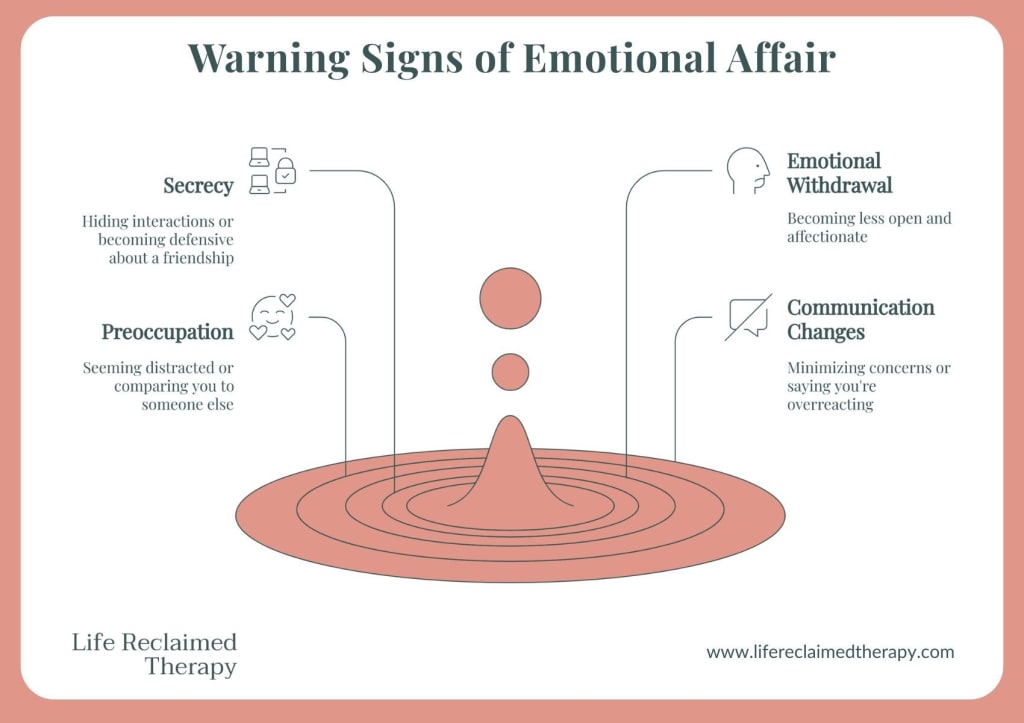
- Secrecy or defensiveness about a “close friendship” or frequent interactions with this friend
- Emotional withdrawal: your partner becomes less open, less affectionate, or stops sharing their thoughts and feelings with you.
- They seem emotionally preoccupied or compare you (even subtly) to someone else.
- You notice changes in how they communicate with you; they may minimize your concerns or say you’re overreacting.
It’s easy to doubt yourself and think, “Maybe I’m just jealous.” But research shows that both men and women experience deep distress from emotional cheating, sometimes even more than from sexual infidelity. If your gut says something feels off, it’s worth listening.
The Ripple Effects of Emotional Adultery
Discovering that your partner has been emotionally involved with someone outside of your relationship can shake your entire sense of security. It’s not “just a friendship.” It’s a kind of emotional betrayal that ripples through your body, mind, and heart. When emotional fidelity is broken, it can leave you questioning your relationship with your partner, your own judgment, and even your self-worth.
Research shows that emotional affairs can also trigger trauma responses similar to those seen after sexual infidelity or adultery because your brain registers emotional betrayal as danger. You may experience:
- Hypervigilance: feeling constantly on alert, scanning for more signs to watch.
- Intrusive thoughts or replaying conversations: your mind is trying to make sense of how this special friendship crossed a line.
- Difficulty sleeping or eating: your body’s stress response is in overdrive.
- Emotional swings: feeling anger, sadness, or longing, sometimes all in the same day.
These reactions are completely normal. A study published in the International Journal of Innovative Research in Technology found that betrayal can activate the same physiological and emotional systems as trauma, leading to anxiety, depression, and even physical symptoms like headaches or muscle tension.
Grief also plays a role here. You might find yourself:
- Mourning the relationship as it once was, even if you’re unsure where it stands now.
- Feeling torn between anger and the longing to reconnect.
- Questioning what was real in your shared story.
You’re not overreacting or being “too sensitive.” The pain you’re feeling makes sense. Healing after an emotional affair isn’t about rushing forgiveness; it’s about slowly rebuilding emotional safety, often with the support of individual or couples counseling, and learning how to protect your relationship while tending gently to your own heart.
Why is it hard to end an emotional affair?
An emotional affair may feel exciting or comforting, a “greener on the other side” escape from loneliness. The level of intimacy feels real, even without physical attraction or affection, making it hard to let go.
Coping With the Pain of an Emotional Affair
When you’ve discovered that your partner has been involved in an emotional affair, it’s natural to feel like your entire world has tilted. Betrayal hurts deeply, especially when it comes from someone who once felt safe. Healing doesn’t happen all at once; it happens one small, brave step at a time.
Here are a few ways to begin caring for yourself through the aftermath:
1. Pause before reacting
When the truth first surfaces, you might feel the urge to confront, cry, or shut down. Try to pause and breathe first. A few deep, slow breaths can help calm the body’s stress response and allow your mind to catch up with your emotions.
2. Name what you feel
There’s no “right” emotional timeline. You might feel anger one day and sadness the next. A 2022 study found that acknowledging and labeling emotions reduces physiological stress and supports emotional recovery.
3. Avoid self-blame
An unfaithful spouse often seeks emotional intimacy elsewhere because of their own internal disconnection, not because you weren’t enough. Emotional cheating often stems from unmet emotional needs or poor boundaries, not a partner’s inadequacy.
4. Set emotional boundaries
You get to decide what kind of communication or space you need right now. Setting boundaries isn’t punishment; it’s protection while your heart heals.
5. Reach for support
You don’t have to navigate this alone. Talking with a trusted therapist or friend who can hold your pain without minimizing it can make a world of difference. In fact, social support has been shown to buffer emotional distress and lower rates of depression after relational trauma.
Healing from an emotional betrayal takes time. And it’s okay if you’re not ready to forgive or move on yet. Start with small steps of self-care and honesty. In time, your sense of peace and trust, especially trust in yourself, will return.
What are the warning signs of emotional cheating?
1. Sharing intimate details with someone outside your relationship
2. Growing secretive or defensive about texts or calls
3. Feeling emotionally closer to them than your partner
4. Less physical affection or closeness at home
Begin Healing and Rebuilding Trust, One Honest Conversation at a Time
If you’ve discovered your partner is having an emotional affair, please know this: you don’t have to face the pain alone. Whether the emotional affair involves a special friendship, a social media post, or simply someone who your partner invests more of their emotional energy in than you, the impact is real. These types of affairs, both sexual and emotional, can leave you questioning your worth, your intuition, and the safety of your romantic relationship.
Individual relationship counseling offers a safe place to pause and unpack the intimate details about your life that feel too heavy to hold on your own. Together, we’ll explore what this experience means for you, gently rebuild your sense of self, and find ways to protect your marriage or partnership moving forward. Healing doesn’t happen overnight, but with support and companionship, it absolutely can begin today.